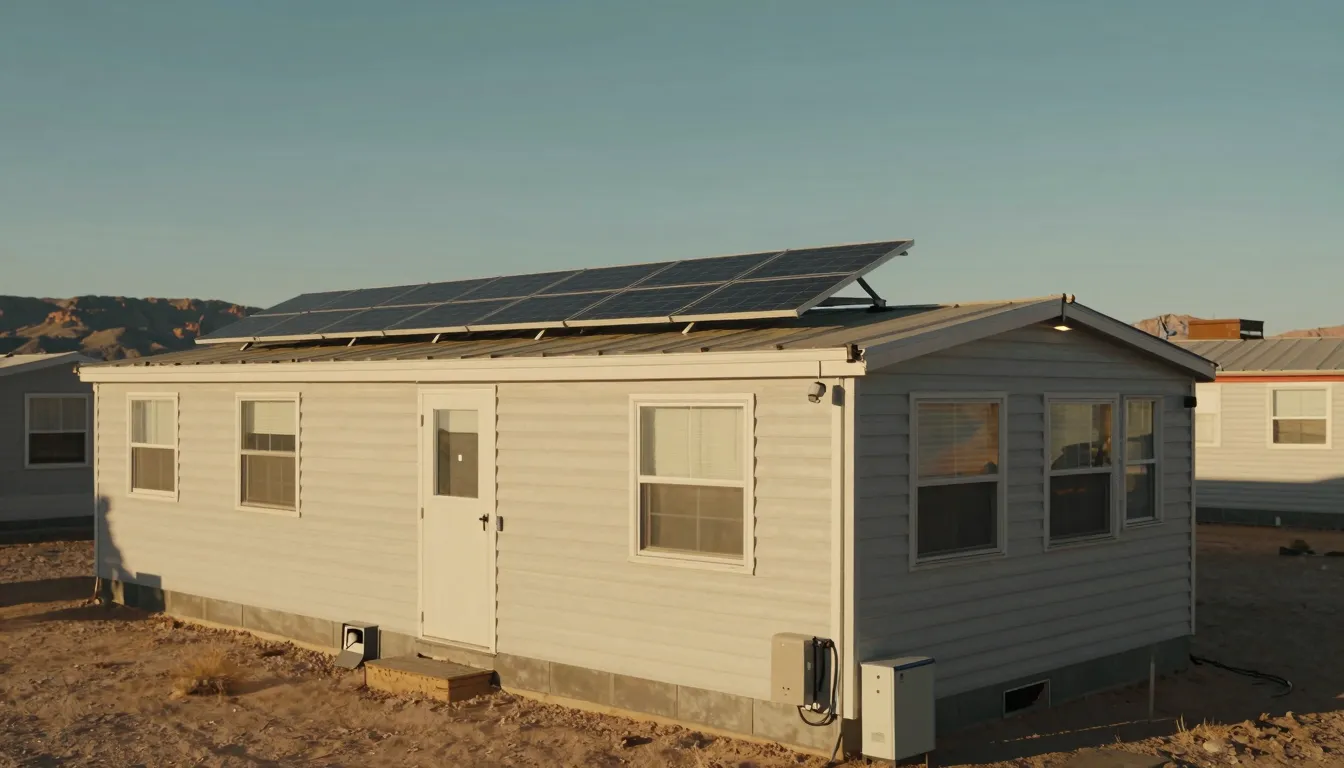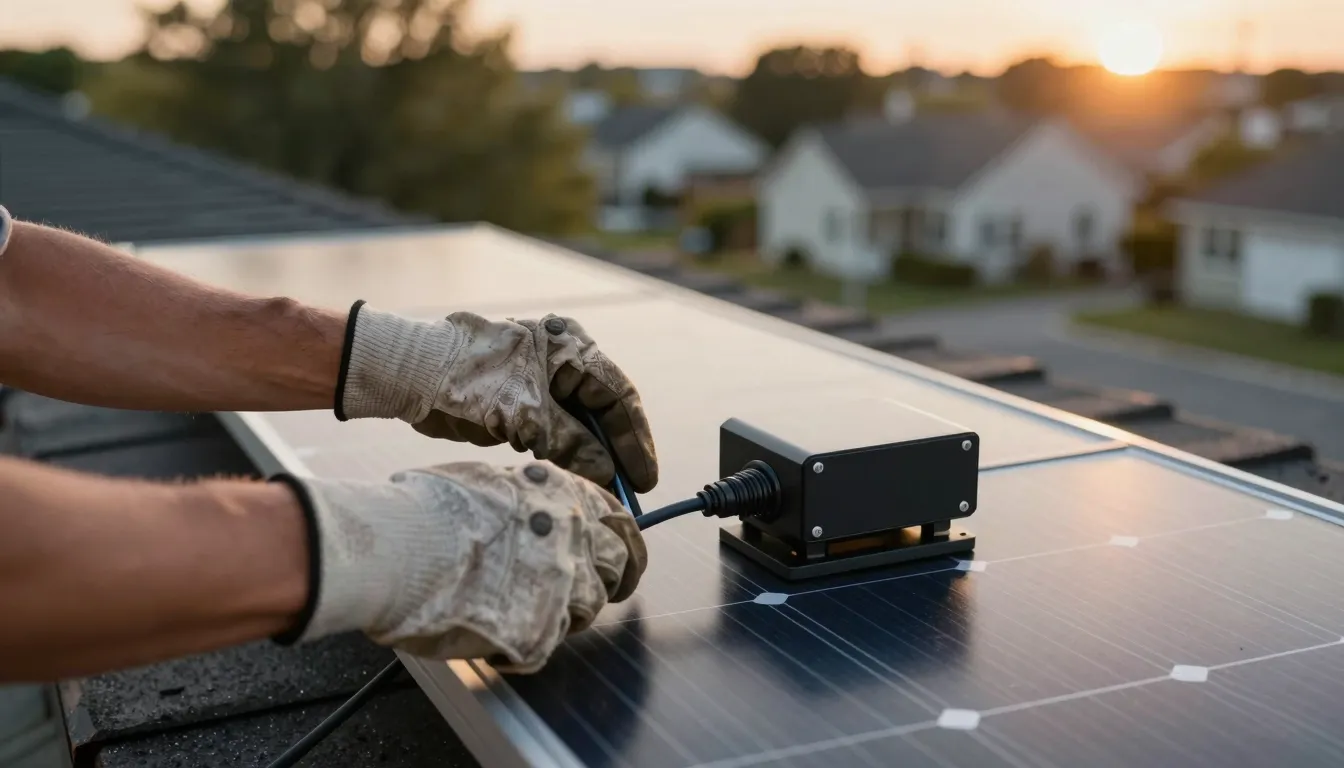
If you are looking to run a plug-and-play solar setup on your apartment balcony or backyard patio, the microinverter is the hardware that makes it possible. This component bridges the gap between raw sunlight and the household outlets humming inside your walls. This guide breaks down exactly how microinverters work, current 2026 retail prices, and the genuine limits of what a small-scale renter system can achieve.
Understanding Microinverter Technology for Home Solar Systems
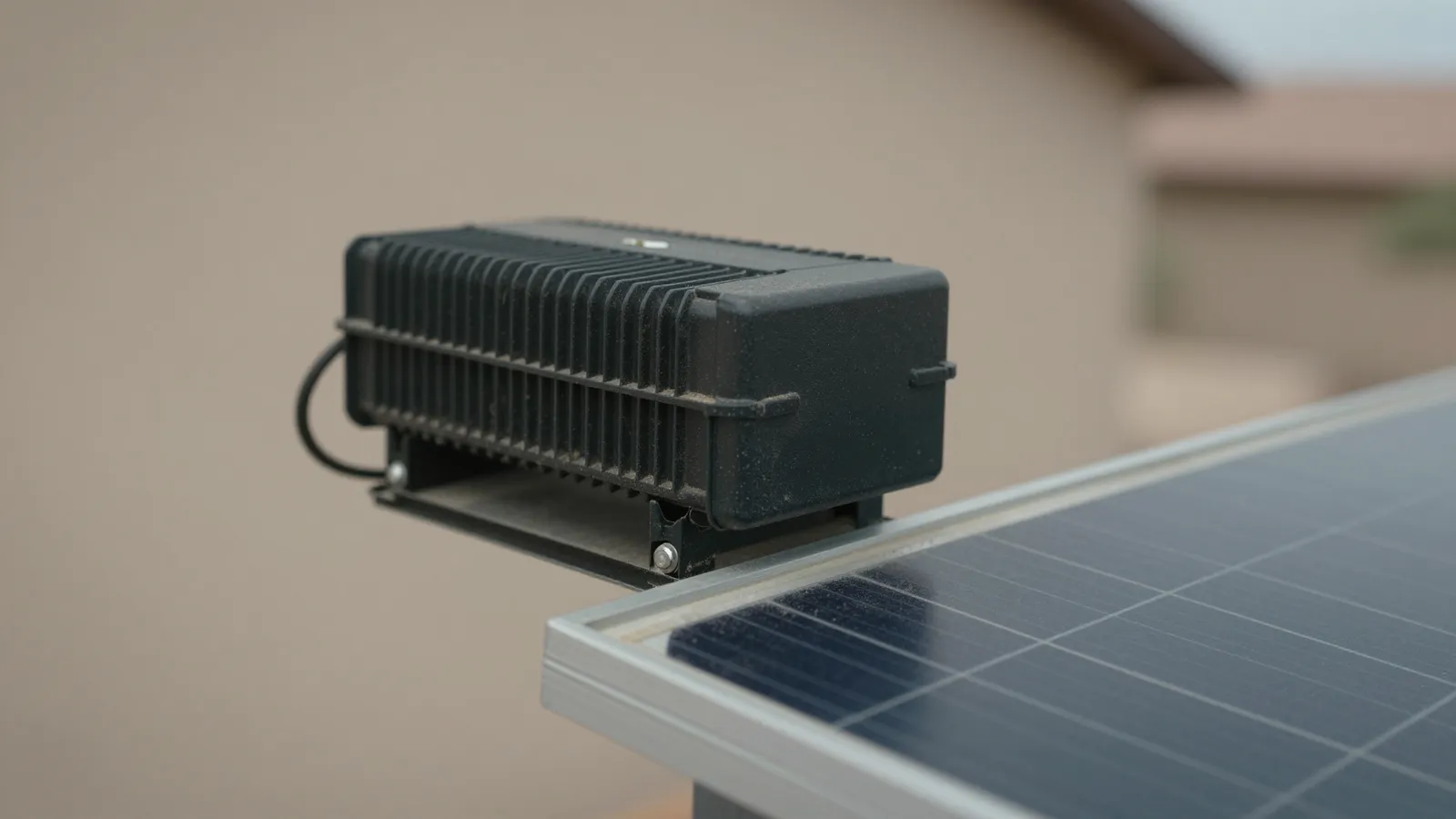
A standard solar panel generates direct current (DC) electricity, but your home electronics and the broader US power grid run on alternating current (AC). Older, traditional solar arrays feed highly pressurized DC power from dozens of panels on a roof down thick metal conduits to a single, wall-mounted "string" inverter. A microinverter, however, shrinks that technology down and mounts it directly behind a single panel, converting DC to AC right on the mounting rack. This keeps voltages dramatically lower, vastly improving the safety margins for a DIY setup.
For apartment / renter solar, this localized conversion is strictly necessary. Keeping high-voltage DC off a crowded apartment balcony minimizes fire risks and electrical hazards. This topology is what enables the European Balkonkraftwerk trend to emerge as mini / micro solar in the United States. When you search for microinverters for solar panels for sale, you are looking for the exact regulatory and technical mechanism that safely transforms a bare piece of silicon into a practical household appliance. High-end brands dominate the roof market, but for a single balcony panel, you are simply looking for a weather-sealed box that outputs 120V AC power.
How Microinverters Maximize Output from Each Solar Panel (Even Shaded Ones)
Apartment balconies and urban backyards rarely enjoy perfect, unobstructed sun. A railing casts harsh horizontal shadows from the south, a neighboring building blocks the morning light, or an overhanging roof creates a shadow line by mid-afternoon. If a single string inverter manages an array of panels and one falls into the shade, the electrical output of the entire system drops to match the weakest link. The shaded panel acts like a kink in a garden hose, choking the current for everything connected behind it.
By contrast, a microinverter utilizes dedicated Maximum Power Point Tracking (MPPT) for each individual panel it connects to. MPPT is an algorithmic process where the inverter constantly adjusts the electrical resistance to extract the peak possible wattage at any given millisecond. Because the conversion happens at the panel level, shading across one module has zero impact on its neighbors. If an oak tree obscures the left side of your patio setup, the panel in the sun will happily continue firing at 100 percent capacity while the shaded one rests. Here is how that trade-off works in practice for a small setup.
Pros
- Isolates shading issues down to the individual panel level
- Keeps potentially dangerous high-voltage DC restricted to a few inches of wire
- Allows you to mix and match different panel brands and wattages in the future
Cons
- Places sensitive computing electronics outside where they absorb brutal summer heat
- Costs more per watt than grouping multiple panels into a central string inverter
- Requires unbolting the panel from the balcony mount if the inverter fails and needs replacement
Cost Analysis: Microinverters vs. String Inverters for Balcony Solar
The microinverters for solar panels price varies heavily based on brand reputation, grid-communication features, and overall wattage capacity. Based on 2026 retail listings for DIY solar equipment, highly sought-after units like the Enphase Micro inverter (specifically the IQ8 series) typically cost between $140 and $180 per unit, but these are generally designed exclusively for 240V split-phase home mounting, making them ill-suited for a 120V apartment plug-in configuration.
For renters building a plug-in solar kit, dual-input microinverters from reputable manufacturers like Hoymiles or APsystems map better to balcony setups. A dual-input unit handles two 400W panels simultaneously and costs roughly $220 to $280 wholesale. This drives down the equipment cost per watt. Meanwhile, the "solar panel with micro inverter price"—where retailers sell them pre-packaged as complete 800W plug-and-play kits—generally ranges from $600 to $850 before shipping. Below is a cost breakdown comparing standard topologies per manufacturer spec sheets.
| Inverter Type | Typical Setup | 2026 Est. Hardware Cost |
|---|---|---|
| Premium Microinverter (e.g., Enphase) | 1 Panel (240V grid-tied roof) | $140 - $180 per panel |
| Dual-Input Microinverter (e.g., Hoymiles) | 2 Panels (120V balcony plug-in) | $220 - $280 per pair |
| Central String Inverter | 8-12 Panels (Small home system) | $1,100 - $1,500 total |
Real-World Energy Savings: What a 600W Microinverter System Delivers Annually
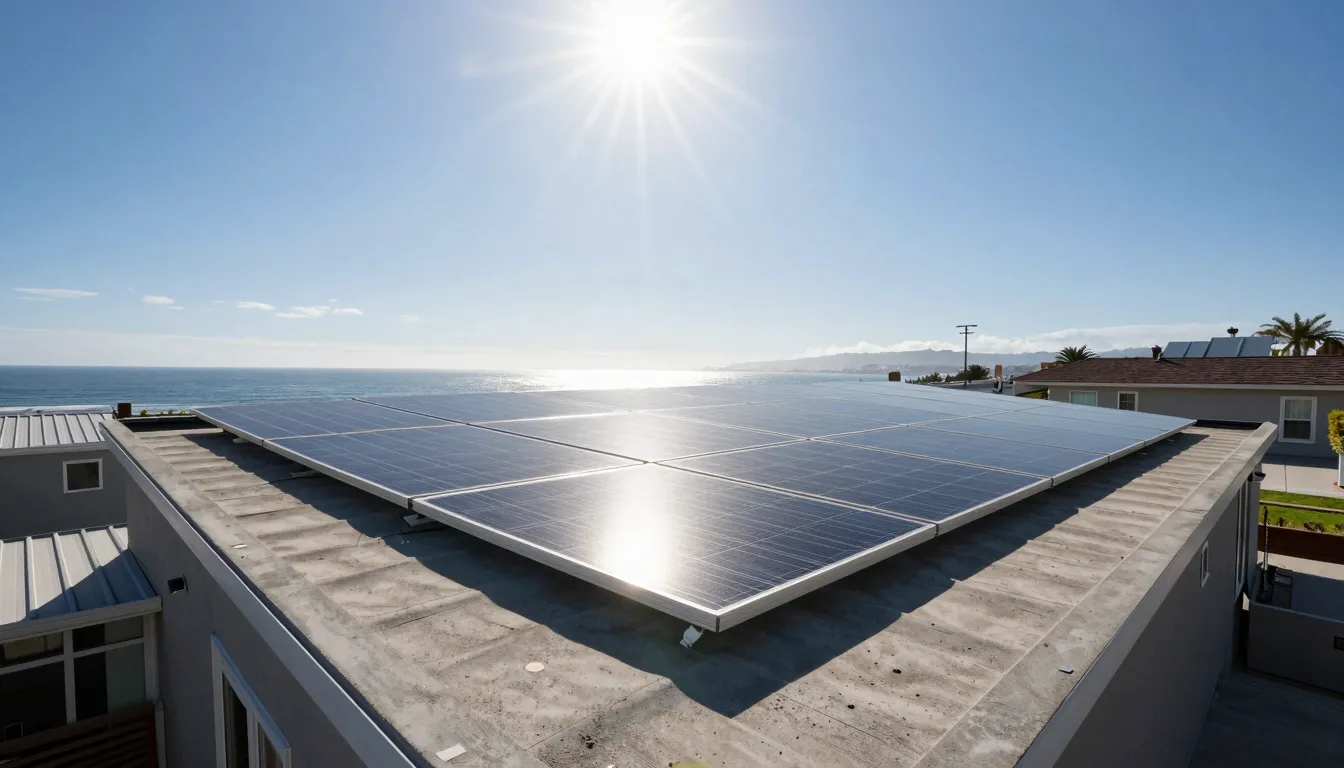
Determining the real payback period of a balcony solar system requires looking past marketing claims and utilizing hard regional data. The yield of a 600W system depends entirely on your latitude and the panel's physical orientation. Utilizing the NREL PVWatts calculator, a south-facing 600-watt, two-panel balcony system tilted at 20 degrees in a high-sun state like Arizona will theoretically generate roughly 1,000 kilowatt-hours (kWh) of electricity annually. The same system on a vertical balcony railing in a cloudy climate like Ohio might struggle to produce 450 kWh.
Translating that electrical yield into dollar savings requires knowing your local utility rate. Based on US Energy Information Administration residential reports for 2026, the national average energy rate hovers around 16.5 cents per kWh. That means a well-positioned 600W setup will trim approximately $165 off a renter's yearly electricity bills. If an 800-watt kit with microinverters built in costs $750 at retail, the honest mathematical payback period sits at roughly four and a half years. Note that virtually all US utilities require an approved interconnection agreement to legally credit this power; plugging an unregistered microinverter into a wall outlet can result in the utility charging you for your outbound power if you possess an older meter, or worse, shutting off your service.
Navigating NEC 2023 Rapid Shutdown Requirements with Microinverters
When discussing solar grid integration, utility operators care primarily about worker safety, which is heavily dictated by the National Electrical Code (NEC). Specifically, NEC 690.12 mandates "rapid shutdown" capabilities for array installations. If the broader electrical grid goes dark during a storm, utility line workers must be confident that residential solar panels are not silently pushing live current back onto the neighborhood power lines. Rapid shutdown ensures that voltage within the bounds of a solar system drops to a safe level within 30 seconds of an outage.
Because a microinverter operates directly behind the panel and fundamentally relies on grid voltage to operate via an "anti-islanding" protocol, it naturally complies with this requirement. The millisecond the local grid drops out, the microinverter loses its AC voltage reference and instantly halts power production. While full-scale roof setups require additional complex switching hardware, microinverters achieve this NEC-compliant shutdown by their basic mechanical nature. However, it is strictly up to the buyer to confirm that their chosen hardware is certified to the UL-1741 safety standard, which proves to local inspectors that the anti-islanding protocol functions correctly.
Troubleshooting Common Microinverter Issues: What to Look For
Even the best microinverters for solar panels experience occasional hiccups. Because they live their entire operational lives pinned between a blazing hot piece of glass and the reflective heat of a wall or railing, thermal throttling is common. On a 105-degree summer day, your 800W microinverter might intentionally limit its processing capacity to 600W simply to keep its internal capacitors from failing. Furthermore, most modern units rely on built-in Wi-Fi antennas to broadcast their daily production statistics to a smartphone app. Because exterior walls and concrete balconies block radio frequency waves, dropped Wi-Fi connections are the single most repeated complaint among renters, leading many to mistakenly assume the inverter has stopped producing power when it has merely stopped transmitting data.
When an inverter genuinely fails to produce power, it is usually indicating a grid-profile fault. Microinverters are programmed to shut off if the power grid's voltage spikes or drops beyond a narrow, legally defined tolerance band. If a heavy appliance in your apartment starts up and sags local circuit voltage, the microinverter might briefly go into a protective sleep mode, often indicated by a flashing red LED on the unit's chassis. Understanding these basic faults is crucial before investing heavily in DIY hardware.
Key Considerations Before Purchasing Your First Balcony Solar Microinverter System
Buyers currently debate the merits of bare panels versus "solar panels with micro inverters built in," heavily marketed as AC modules. An AC module simplifies installation because the panel outputs ready-to-use household current straight from the factory. However, separating the components often allows for easier maintenance; if the microinverter dies just out of warranty, you can bolt a new one onto the rack without needing to throw away a perfectly functional solar module.
Additionally, consumers often ask how to combine microinverters for solar panels with battery storage. Traditionally, microinverters push generated power immediately to the grid. Rerouting that power to a portable power station or home battery pack (AC coupling) requires specific, sophisticated gateway hardware to emulate grid frequency when the true grid is down. If your aim is to keep your refrigerator running during a blackout, a basic plug-and-play microinverter is entirely the wrong tool; you generally need off-grid charge controllers or premium closed-ecosystems (like Enphase micro inverter solar panels combined with their proprietary IQ batteries) to store power effectively.
Sources: Projected financial savings and production yields are based on the NREL PVWatts calculator, utilizing 2026 average residential electricity rates verified by the US Energy Information Administration (~16.5¢/kWh). Retail price estimates accurately reflect published 2026 manufacturer datasheets and commercial distributor listings for Hoymiles, APsystems, and Enphase hardware. Regulatory commentary relies on the 2023 edition of the National Electrical Code standard 690.12 regarding rapid shutdown safety protocols.
Why are people getting rid of their solar panels?
Homeowners do not usually remove functional systems out of buyer's remorse. The vast majority of removals are temporary—often necessary because the physical roof structure underneath the panels needs to be replaced. For permanent removals, it frequently involves older leased systems where a new homebuyer refuses to take over an aggressive contract, or where highly obsolete inverters fail out of warranty and the manufacturer no longer exists to honor replacements.
How much do solar microinverters cost?
Based on 2026 retail distributor rates, a standard dual-input microinverter capable of supporting two 400W balcony panels costs between $200 and $280. Premium single-panel units built for large 240V roof arrays generally sit between $140 and $180 per unit. These prices cover just the inverter hardware, excluding the panels, mounting brackets, and specialized AC trunk cables.
How many solar panels can a micro inverter handle?
This depends entirely on the design of the unit itself. A single-input microinverter handles exactly one panel. A dual-input microinverter handles two panels up to a specified combined wattage, and quad-input variants can independently track and convert power from four panels simultaneously. An installer must cross-reference the panel's maximum voltage with the inverter's datasheet limits before pairing them.
What are the disadvantages of microinverters?
The heaviest drawback is heat exposure. Microinverters live behind the solar panel, forcing sensitive electronics to bake in daily temperatures that frequently exceed 140 degrees Fahrenheit (60°C). Over time, this thermal cycling degrades internal capacitors faster than a string inverter sitting in a cool basement. Furthermore, microinverter hardware costs more per watt to manufacture, raising the initial purchase price of the kit.