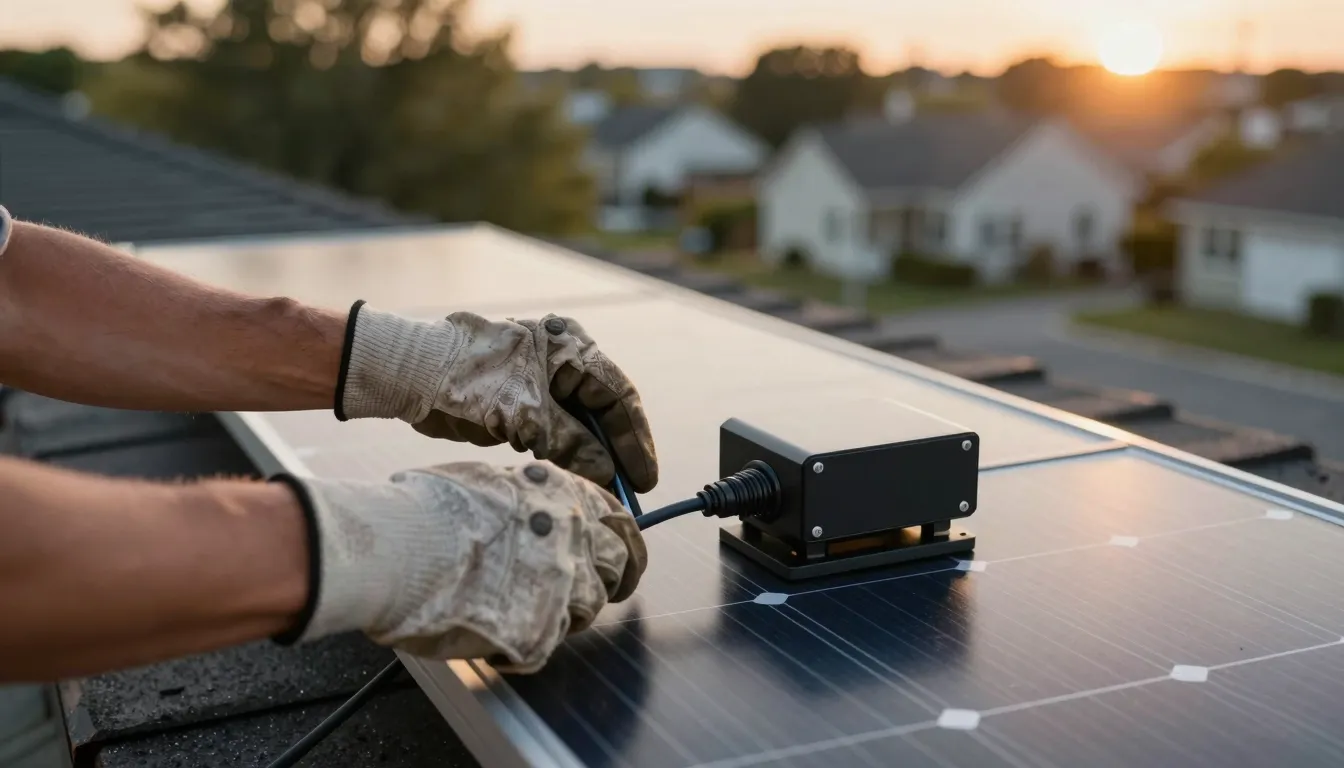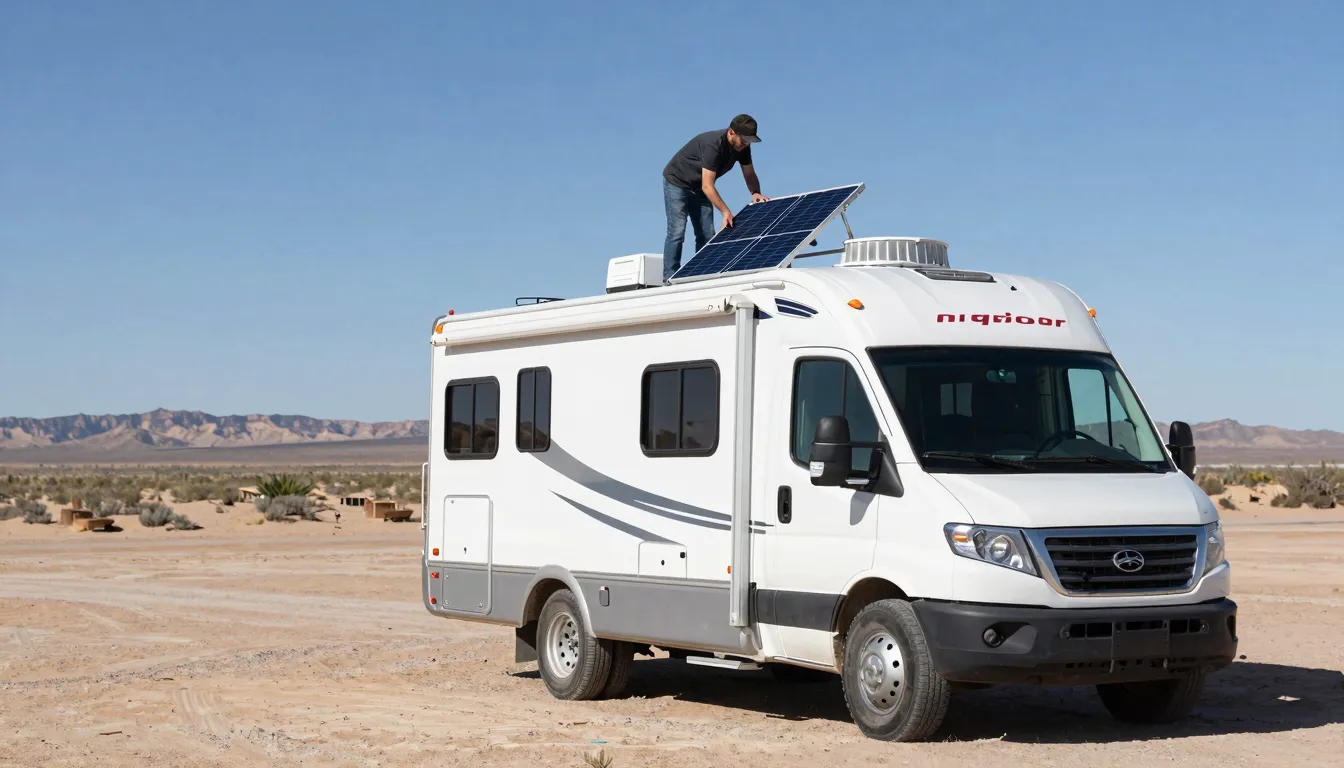
Adding an off-grid charging system to your recreational vehicle transforms how you camp, replacing noisy generators and expensive hookups with silent, sustainable power. In this guide, we break down exactly what you need to size your RV layout, from battery math and standard plug-in solar kits to real 2026 retail costs. You will learn the difference between a portable micro solar setup and a standard roof-mounted array, along with the strict hardware codes you must check before cutting into your fiberglass.
Understanding Your RV's Power Needs: How Many Solar Panels Do You Really Need?
The number of solar panels you need for an RV relies entirely on whether you intend to run basic 12-volt accessories or high-draw 120-volt appliances. For most campers, baseline electricity usage involves powering interior LED puck lights, a 12V water pump, ceiling vent fans, and device chargers. According to 2026 manufacturer spec sheets, a simple DC-only load requires just 100 to 200 watts of solar capacity paired with a 100 Amp-hour (Ah) lithium battery. This modest footprint is effectively the RV equivalent of apartment renter solar, providing enough energy to keep the essentials online for a weekend trip without demanding a massive roof array.
If you prefer to run a microwave, a hair dryer, or an air conditioning unit off-grid, the required capacity spikes dramatically. Based on data from the US Dept. of Energy — solar basics, heating and cooling appliances are the most extreme drains on any electrical system. Running a single 15,000 BTU rooftop AC unit requires roughly 1,500 continuous watts. To support that draw for even a few hours, you need an absolute minimum of 1,200 to 1,600 watts of solar, a heavy 3,000-watt inverter, and a massive battery bank—usually measuring at least 400Ah to 600Ah.
Before committing to an intimidating array, you might want to rethink traditional roof mounting altogether. Much like European Balkonkraftwerk setups or plug-and-play solar panels tied to a patio, portable folding RV panels act as self-contained micro solar stations. You unclip them from a storage bay, aim them directly at the morning sun via adjustable kickstands, and plug them into a portable power station. You get similar charging advantages without risking water leaks or committing to permanent roof hardware.
Choosing the Right RV Solar Panel Kit: What Do I Need to Hook Up Solar Panels?
When upgrading from a basic portable panel to a hardwired permanent array, you have to source and combine several distinct components. Buying a pre-packaged off-grid kit usually covers the fundamentals, but it pays to understand what happens inside the wiring. To actually hook up solar panels to your RV, you need four primary components: the photovoltaic panels, a charge controller, a deep-cycle battery bank, and an inverter.
The photovoltaic panel collects DC electricity, which is sent through heavily insulated 10 AWG solar cables directly to the charge controller. The charge controller is perhaps the most critical piece of safety electronics in the loop; it acts as a gatekeeper, stepping down the fluctuating, unregulated voltage from the roof panels so that it can safely charge your 12V batteries without boiling or overcharging them. Finally, if you want to power household wall outlets, the inverter takes that stored 12V DC battery power and transforms it into the 120V AC power necessary for a laptop charger, television, or coffee maker. Because these voltages vary wildly throughout the system, fusing is mandatory.
Neglecting inline protection is one of the most common critical errors in amateur 12V wiring. Before placing any order, check the max voltage inputs on the provided controller.
Step-by-Step DIY RV Solar Panel Installation (and When to Call a Pro)
The best RV solar panel installation strictly follows local code, safeguards your roof from water intrusion, and correctly regulates electrical current. A standard DIY RV solar panel installation begins by mapping out your roof real estate. You need a layout that prevents rooftop AC shrouds or plumbing vents from casting hard shadows over your solar cells, as partial shading drastically limits power generation. Next, mounting brackets (known as Z-brackets) are secured to the panel frames, screwed into the roof decking, and heavily covered in an industrial self-leveling sealant like Dicor to prevent rain leaks.
Routing the cables into the RV cabin is typically the most stressful part of a DIY job. Many installers avoid drilling a brand-new ceiling hole by running the positive and negative 10 AWG wires down through the existing RV refrigerator vent stack. From there, the wiring routes to a clearly accessible interior compartment where the charge controller and battery bank reside. Connecting the low-voltage DC lines to the battery busbars is generally straightforward for a smart beginner who isolates the power and uses properly sized lug terminals.
However, when the time comes to tie a powerful inverter directly into the RV's main breaker panel, the complexity scales up. AC distribution wiring is subjected to specific National Electrical Code requirements under NEC Article 690. When dealing with high-voltage alternating current that could energize the RV chassis, the decision to hire heavily depends on your comfort level with panelboards and transfer switches.
Pros
- Keeping the project DIY eliminates costly $150/hour shop labor rates.
- Building the system yourself leaves you uniquely qualified to troubleshoot faults while off-grid.
Cons
- Improperly sealed roof penetrations will void most factory RV moisture warranties.
- Mistakes made while integrating a 120-volt inverter into an existing breaker panel carry immediate, lethal shock hazards.
Maximizing Your RV Solar Power: What Will a 400 Watt Solar Panel Run?
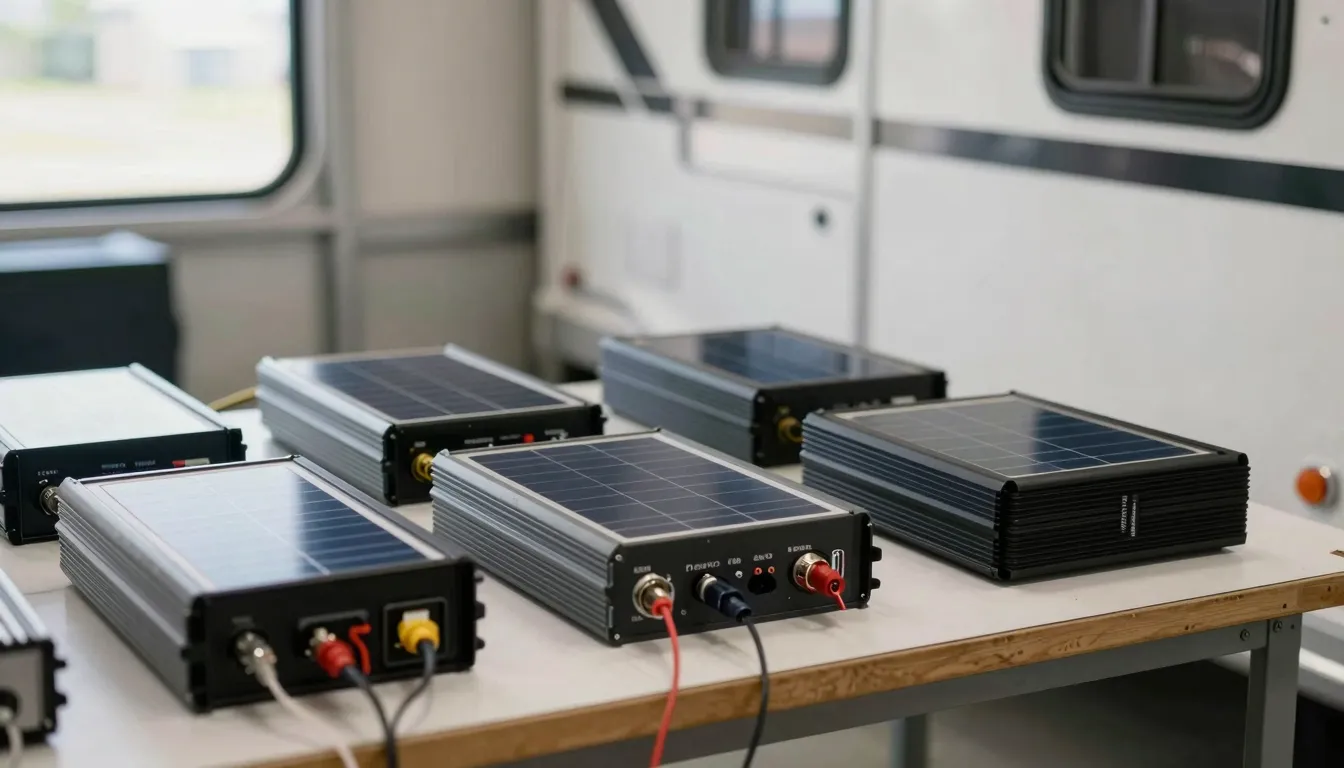
A 400-watt solar array currently serves as the industry standard for mid-sized travel trailers and long-wheelbase camper vans. To figure out what a 400 watt solar panel will run, we have to look past the sticker wattage and evaluate daily energy yield. Solar panels mounted flat against an RV roof lose efficiency because they cannot tilt optimally toward the sun, and they run incredibly hot against the fiberglass shell. Based on 2026 solar output algorithms from NREL PVWatts, a flat-mounted 400W array traveling through the American Southwest will realistically produce between 1.5 and 2.1 kilowatt-hours (kWh) of electricity per summer day.
That 1,500 to 2,100 watt-hours of daily production provides immense utility if managed correctly. It is plenty to fully charge a laptop (which takes roughly 50 to 80Wh), run a roof vent fan for 12 hours straight (about 360Wh in total), supply continuous power to modern LED lighting, and sustain a high-efficiency 12V DC compressor refrigerator overnight. In this configuration, the RV effectively mimics the footprint of a modern plug-in solar apartment setup, providing self-reliance for low-draw lifestyle comforts.
The table below breaks down estimated daily power demands for standard RV appliances to illustrate exactly how far that 1,800Wh daily budget goes.
| RV Appliance (Approximate Use Time) | Estimated Daily Consumption |
|---|---|
| Laptop or tablet charging (4 hours) | 200 Watt-hours |
| 12V Compressor Refrigerator (24 hours) | 600 Watt-hours |
| Interior LED remote lighting (4 hours) | 50 Watt-hours |
| Roof Vent Fan at medium speed (8 hours) | 250 Watt-hours |
| Standard RV Air Conditioner (just 1 hour) | 1,500 Watt-hours |
Battery Basics: How Long Will a 200W Solar Panel Take to Charge Your RV Battery?
Because direct current output dies the moment a cloud passes or the sun sets, panels are fundamentally useless without energy storage. It is vital to match incoming solar charge rates to your battery capacity. When calculating how long a 200W solar panel takes to charge a 12V battery, you must base the math on standard lithium iron phosphate (LiFePO4) specifications. A typical 100 Amp-hour 12V battery holds a maximum of roughly 1,200 watt-hours of reserve energy.
In real-world conditions, a 200W monocrystalline panel does not yield 200 continuous watts. Factoring in charge controller conversion losses and flat-roof mounting limitations, a 200W panel typically pushes about 140 to 160 watts to the battery under peak midday sun. If your 100Ah battery was entirely dead (0% state of charge), you need to replace all 1,200 watt-hours. At a charge rate of 150 watts, the math indicates it will take roughly 8 full hours of direct, unshaded sunlight.
Because peak sun hours—the period when the sun is optimally positioned overhead—usually only last between 4 and 5 hours across most US regions, that 8-hour charge cannot happen in a single afternoon. Therefore, a single 200W panel typically takes a day and a half of clear weather to fully recharge a fully depleted 100Ah lithium battery back to 100 percent.
Real-World Savings: How Much a 600W RV Solar Kit Can Save You Annually
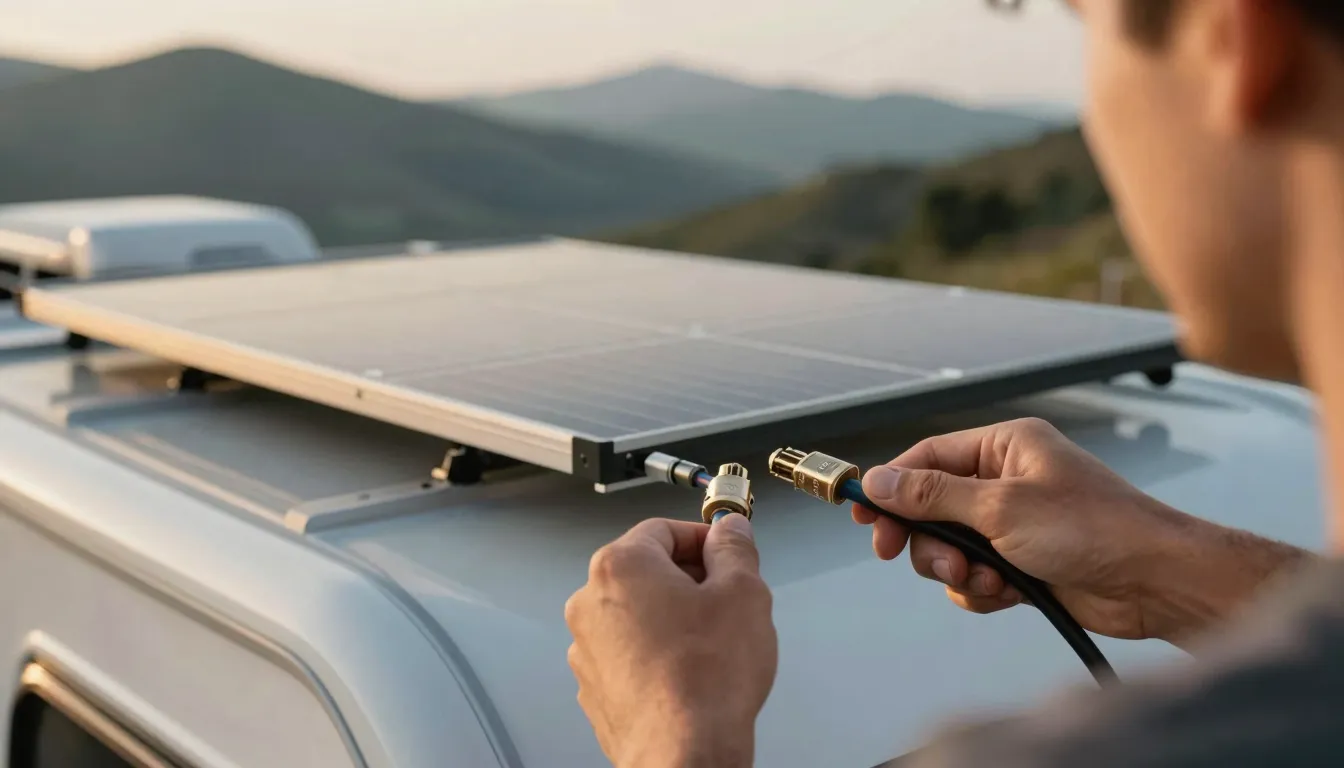
When assessing traditional rooftop grids, residential payback periods are calculated against local utility prices. Based on 2026 data published by the US Energy Information Administration, national average retail power costs roughly 16¢ per kWh. But in an RV setting, applying standard grid math fails to capture the real value. RV off-grid systems offset the inflated, highly localized costs of campground electrical hookup fees and portable generator fuel consumption.
As of 2026, a comprehensive 600-watt off-grid solar kit comprising three 200-watt monocrystalline panels, an MPPT charge controller, wires, and brackets runs between $600 and $800 from mainstream direct-to-consumer retailers. If you rely on paid RV parks solely for their 30-amp power pedestals, you are likely paying between $45 and $65 per night. Using a 600W system to boondock indefinitely on BLM (Bureau of Land Management) public lands allows you to eliminate those nightly fees entirely. Assuming an average campsite fee of $50, the initial hardware investment pays for itself after skipping just 14 to 16 nights of paid parking.
If you prefer to dry camp but currently rely on a gasoline inverter generator, the math is similarly aggressive. Running a 2,000-watt generator for 6 hours a day consumes roughly one to one-and-a-half gallons of fuel. If gasoline averages $3.50 a gallon, generator charging costs up to $5 a day plus localized engine maintenance. A silent, maintenance-free mini solar setup covers that exact same electrical deficit without consuming fuel, easily breaking even within a single extended road trip season.
Finding Professional RV Solar Panel Installation Near You
If piecing together complex wiring blueprints or digging through DSIRE for localized system rulings feels outside your toolkit, hiring an expert is the safest route forward. When you start an internet search for an "RV solar panel installation near me," do not just settle for standard residential electricians. You need mobile RV technicians or dedicated aftermarket shops that hold specific industry credentials, such as certifications from the RVIA (RV Industry Association) or NABCEP (North American Board of Certified Energy Practitioners).
In 2026, professional motorhome repair shops typically bill labor at $120 to $180 per hour. Securing a basic 400W to 600W system on a fiberglass roof—running the cables inside, sealing the penetrations, and wiring the controller to an existing battery bay—usually takes a certified technician 4 to 6 hours. You should expect to pay an extra $500 to $1,000 in labor costs on top of your retail hardware. Be aware that many high-end installers will aggressively decline to install third-party equipment you bought on Amazon, preferring to source the hardware themselves so they can confidently warranty the parts.
Before agreeing to an estimate, we highly recommend finding a detailed RV solar panel installation video on YouTube and watching the entire physical process from start to finish. Understanding how installers locate roof studs, how they use lap sealant, and how heavy gauge wiring routes behind cabinet walls helps you verify whether the technician quoting you is charging a fair number of labor hours for the work actually required.
Sources: We compiled manufacturer datasheets from dedicated 12V suppliers to establish reasonable 2026 performance specifications for off-grid hardware. Expected usage offsets and residential rates are based on 2026 US Energy Information Administration (EIA) data (~16¢/kWh average). Peak sun-hour multiplication and array efficiency metrics rely on algorithms sourced from NREL PVWatts. High-voltage safety boundaries reflect the 2026 National Electrical Code (NEC Article 690), and retail prices represent typical 2026 point-of-sale costs for mid-tier 400W and 600W direct-to-consumer kits.
How many solar panels do I need to run a RV?
It depends entirely on your appliances. To run 12V LED lights, charge devices, and power a water pump, campers typically rely on 100 to 200 watts. If you intend to run higher-draw 120V AC appliances like microwaves or televisions through an inverter, a standard baseline is 400 to 600 watts of mounted solar.
What will a 400 watt solar panel run in an RV?
Under strong summer sunshine, a 400-watt array flat-mounted on a roof generates about 1.5 to 2.1 kilowatt-hours per day. That is enough stored energy to easily run roof vent fans, interior lighting, laptops, device chargers, and most high-efficiency 12V compressor refrigerators continuously without grid power.
What do I need to hook up solar panels to my RV?
A fully functional system requires four core hardware pieces: the solar panels, a charge controller (PWM or MPPT) to regulate the descending roof voltage, a deep-cycle battery bank to store the energy, and an inverter if you want to power standard household wall plugs. You also must include correctly sized 10 AWG cables and inline system fuses to prevent fires.
How long will a 200W solar panel take to charge a 12V battery?
Assuming you are trying to fill a 100Ah (1,200Wh) 12V lithium iron phosphate battery up from zero percent, it realistically takes about 8 hours of peak unshaded sunlight. Because peak sun only lasts 4 to 5 hours a day, plan on a day and a half to fully recover a dead battery using just one 200W panel.