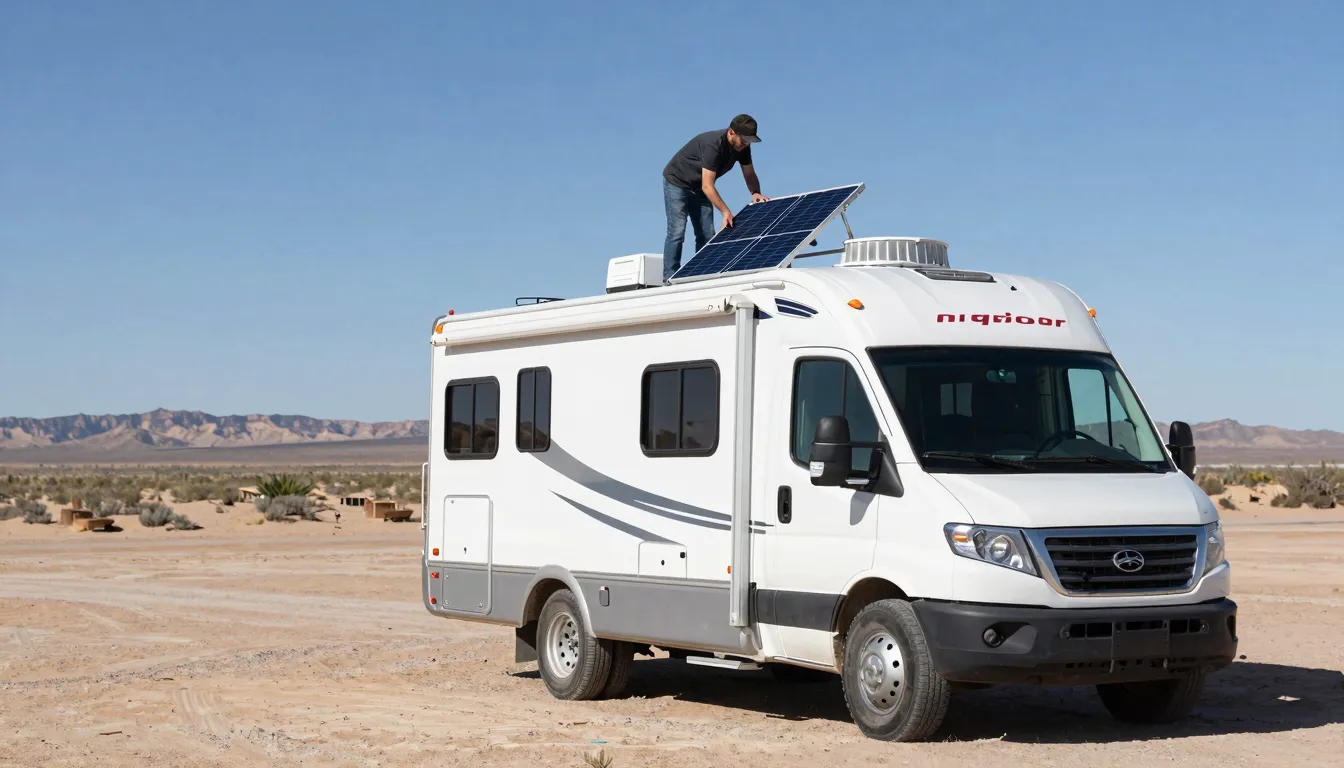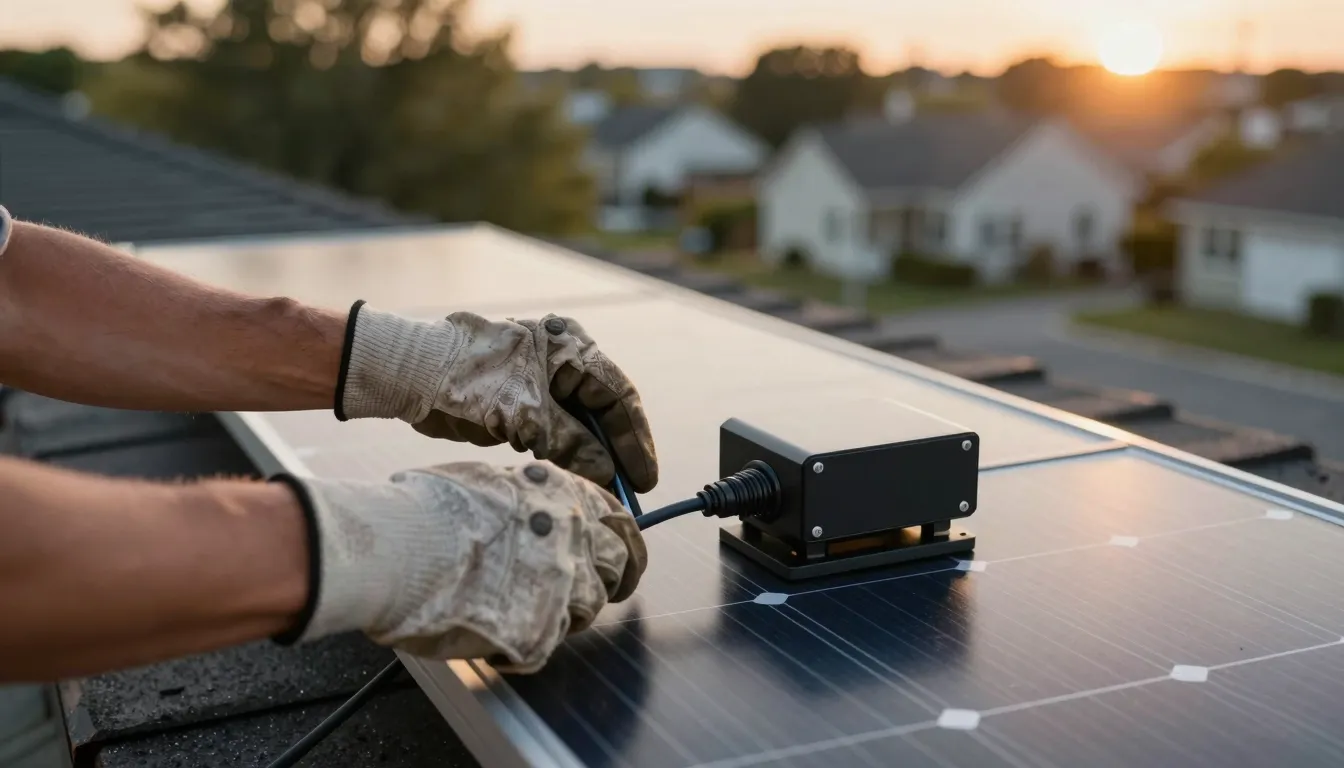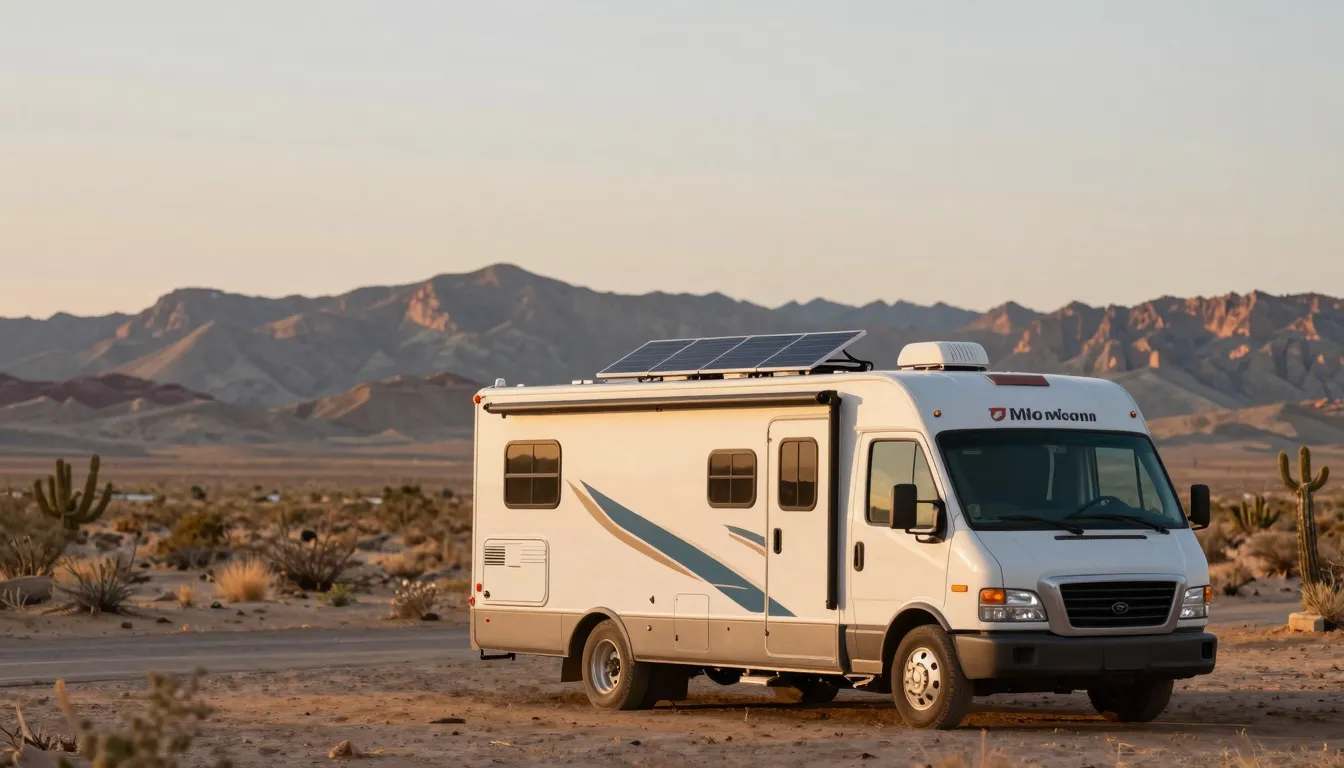
Taking an RV off-grid requires more than mounting a few panels to the roof; it demands a balanced system of generation, storage, and AC conversion. This guide breaks down manufacturer manufacturer specifications, electrical standards, and current 2026 retail prices to explain how to size, select, and safely deploy a complete RV solar system. You will learn the raw math behind powering standard appliances, the cold reality of running air conditioning off a battery bank, and how to verify if a kit actually meets your daily energy needs before you invest.
Understanding RV Solar Panel Kits: What's Included and How It Works
A fully functioning off-grid RV system consists of four primary components: the solar panels, a charge controller, a deep-cycle battery bank, and an inverter. Rather than piecing these together individually, many owners opt for an all-in-one bundle to avoid compatibility issues. The basic premise relies on solar basics: the panels catch sunlight to generate DC power, the charge controller regulates that voltage to safely charge your batteries, and the inverter transforms that stored DC power into the 120V AC power required by household wall outlets.
The market for these bundled systems has evolved alongside residential solutions. In many ways, modern RV kits mirror the simplicity of a Balkonkraftwerk (balcony solar plant), utilizing plug-and-play solar connectors like MC4s to link panels with minimal specialized tooling. Just as apartment / renter solar setups prioritize standardized connections so tenants can install and pack up safely, RV solar relies on modularity. However, because RV components endure highway vibration and high wind loads, the mounting hardware and rigid panel frames are substantially heavier than those used for basic plug-in solar window units.
Calculating Your RV's Power Needs: How Many Solar Panels to Run a 30 Amp RV?
When owners ask how many solar panels they need to run a 30 amp RV, the question is based on a slight misunderstanding of how RV electrical systems function. A standard 30-amp RV hookup supplies 120 volts, meaning the entire rig is capable of drawing up to 3,600 watts of sustained power at any given moment. Sizing a solar array to provide 3,600 continuous watts on the roof of a standard RV is physically impossible due to space constraints, and would require a massive 300-amp battery draw at 12 volts per manufacturer specs.
Instead, off-grid sizing dictates you calculate your daily watt-hour (Wh) consumption. To run a typical 30-amp RV's electronics—lights, water pump, a TV, laptops, a microwave for five minutes, and a 12V ventilation fan—most owners consume between 1,500 and 2,500 watt-hours per day, based on 2026 manufacturer appliance ratings. To replenish 2,500 watt-hours, a practical design requires roughly 600 to 800 watts of solar, assuming an average of four peak sun hours per day as modeled heavily by NREL PVWatts.
Choosing the Best RV Solar Kit: Evaluating Panels, Batteries, and Inverters for Off-Grid Living
Finding the best RV solar panel kit with battery and inverter comes down to verifying the quality of the core components. As of 2026, a premium kit should feature monocrystalline panels, an MPPT (Maximum Power Point Tracking) charge controller, a pure sine wave inverter, and Lithium Iron Phosphate (LiFePO4) batteries. Pure sine wave inverters are critical; modified sine wave inverters are cheaper, but they introduce electrical static that can damage sensitive electronics like laptops or variable-speed CPAP machines over time.
Another major factor is system voltage. While older RVs are traditionally wired for 12V direct current systems, many high-capacity modern bundles step up the panel and battery voltage to 24V or 48V. Operating at higher voltages reduces the amperage passing through the cables, allowing for thinner, lighter, and cheaper wiring between the battery bank and the inverter.
Pros
- 12V native systems are incredibly easy to integrate with an RV's existing lights, water pumps, and fans without additional step-down converters.
- Higher voltage (24V/48V) systems drastically decrease required wire gauge, saving copper costs and minimizing voltage drop on larger arrays.
Cons
- Attempting to push 3,000 watts from a 12V battery bank requires exceptionally thick, expensive cables capable of handling 250+ amps.
- A 24V or 48V battery bank requires a separate step-down converter to run your RV's 12V native DC fuses and appliances safety.
For users attempting to power serious loads like multiple appliances simultaneously, jumping to a 1000 Watt Solar Panel Kit for RV use is often the recommended baseline in 2026. A kit of this size usually mandates moving to higher voltage battery banks to efficiently manage the heavy inward charge current during peak afternoon sun.
Can a 200W Solar Panel Run a Refrigerator? Real-World Power Demands Explained
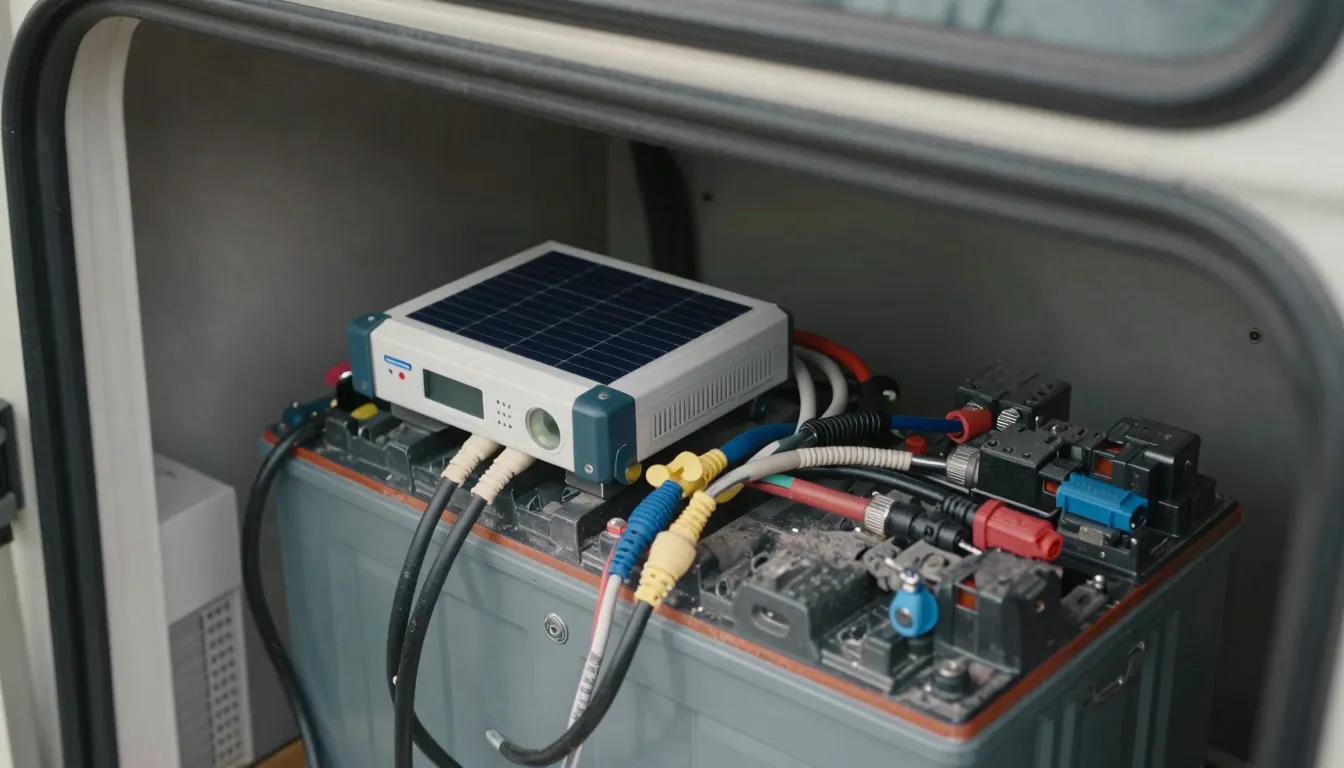
A common threshold question for beginners is whether a basic 200W kit is enough to keep food cold. The answer depends entirely on the type of refrigerator installed. Per current 2026 specs, a high-efficiency 12V DC compressor refrigerator designed specifically for RVs draws roughly 350 to 500 watt-hours per day in moderate climates. Assuming four optimal sun hours, a 200W panel generates roughly 800 watt-hours daily. That covers the 12V fridge with a decent buffer for lights and device chargers.
However, if the RV features a standard residential 120V AC refrigerator, the math changes drastically. A residential block fridge running off a battery requires the inverter to remain powered on 24/7. Inverters have an "idle draw"—often 10 to 30 watts just to stay awake—which can easily consume 400 watt-hours a day on its own. Add the compressor's AC power demands, and a 200W panel will consistently fall short. Below is an estimate of typical 24-hour power demands based on 2026 hardware standards.
| RV Appliance Type | Typical 24-Hour Energy Draw |
|---|---|
| 12V DC Compressor Fridge | 350 - 550 Wh |
| 120V AC Residential Fridge | 1,000 - 1,500 Wh (incl. inverter idle) |
| Starlink / Satellite Internet | 1,000 - 1,400 Wh |
| LED Lighting (4 hours) | 50 - 100 Wh |
RV Air Conditioning on Solar Power: What It Takes to Stay Cool Off-Grid
Running climate control is the heaviest lift in mobile solar. An RV solar panel kit to run AC is inherently expensive and bulky. According to standardized AC manufacturer sheets, a standard 13,500 BTU rooftop air conditioner requires roughly 3,000 watts to trigger its compressor, and then settles into a continuous running draw of approximately 1,500 watts. To run that air conditioner for just four hours during the heat of the day, you will consume 6,000 watt-hours of energy.
To sustain a 6,000 Wh daily draw alongside normal RV life, a minimal viable system in 2026 requires at least a 3,000W inverter, 600 to 800 Amp-hours of 12V lithium storage (roughly 7,200 to 9,600 Wh), and a 1000 Watt Solar Panel Kit for RV recharge capability—though 1,500W+ on the roof is preferred to catch up on consecutive hot days. Attempting to run typical RV air conditioning off a basic 400W starter kit will drain a standard battery flat in under an hour.
Decoding the Price Tag: How Much a 600W RV Solar Kit Saves Annually on Shore Power
When pricing out systems, the hard math of financial payback looks very different in an RV than on a stationary home. For residential solar, you compare production against utility rates. Based on 2026 data from the US Energy Information Administration (EIA), the national average residential electricity rate hovers around 16 cents per kilowatt-hour. At that rate, a 600W system producing 2.4 kWh per day only generates about $0.40 worth of raw electricity daily.
The real payback of an RV solar kit comes from avoiding campground hookup fees. In 2026, powered RV spots routinely cost $30 to $60 more per night than primitive, unpowered dry-camping spots. If a $2,500 complete solar and lithium battery kit enables you to dry-camp and avoid a $40 nightly premium, the system can effectively pay for itself in approximately 60 to 65 nights of off-grid use, not counting the ongoing cost of fuel you save by avoiding running a gas generator.
Key Considerations Before Buying an RV Solar Kit with Battery and Inverter
Before committing to a system, it is vital to evaluate your RV's existing infrastructure. Splicing an aftermarket 3,000-watt inverter into the main AC breaker panel of an RV requires strict adherence to safety standards. Unlike simple apartment plug-and-play electronics, tying into an RV panel brings vehicular grounding codes into play. Wiring modifications for mobile units are strictly governed by Article 551 of the National Electrical Code published by the National Fire Protection Association (NFPA). Given the fire risks associated with shorting high-amperage DC lines, heavily modifying a central RV breaker panel to accept inverter power should be deferred to a licensed electrician.
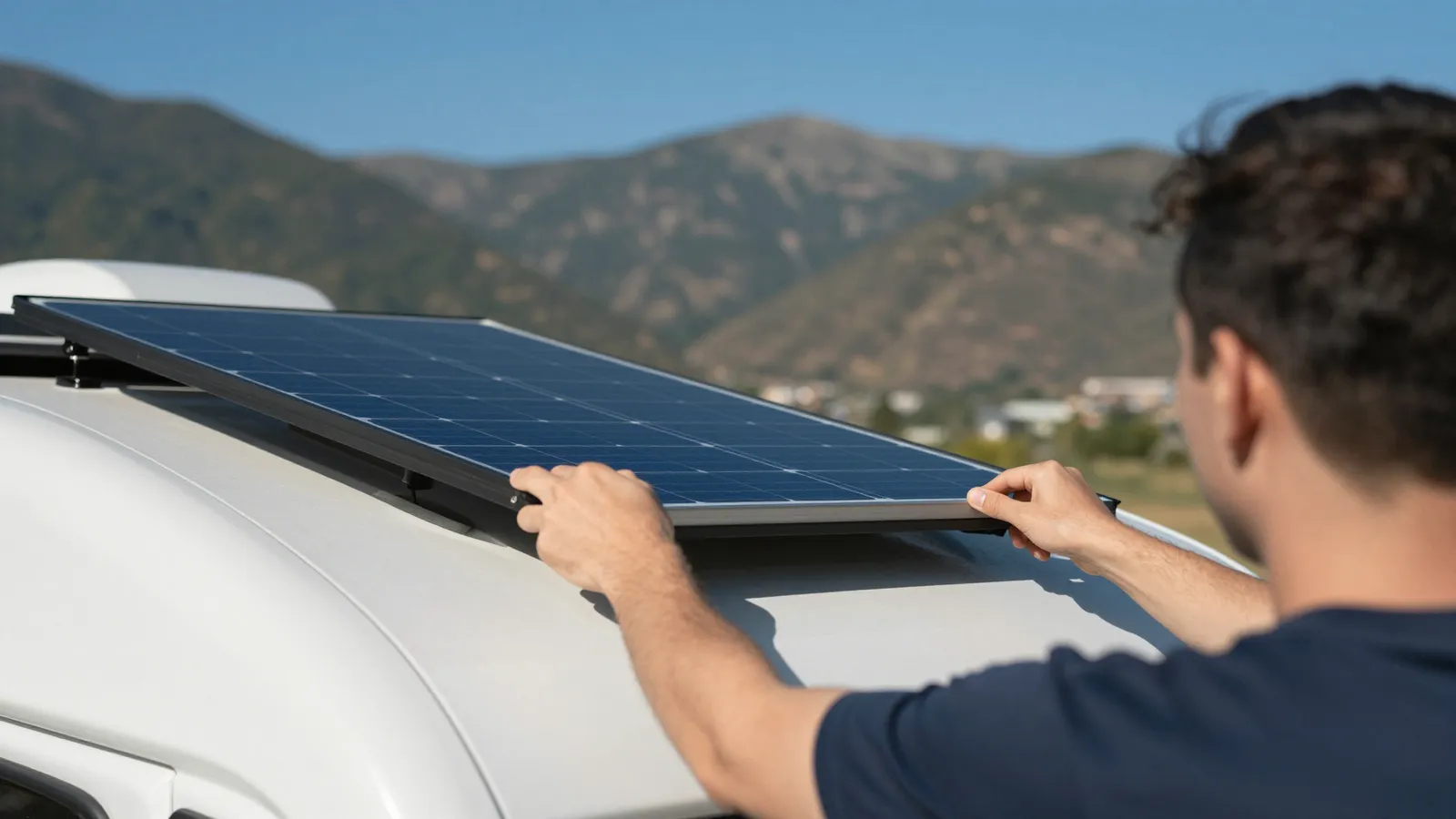
Space limits also pose a physical constraint. A standard 200W rigid monocrystalline panel is roughly 24 by 60 inches. A 600W array requires mapping three of these onto a roof already crowded by plumbing vents, skylights, and air conditioning cowls. To bypass this, many owners supplement their rooftop arrays with deployable mini / micro solar panels—folding panels stored in a cargo bay and set out on the ground. These allow the RV to remain parked under cooling tree shade while the ground array sits directly in the sun via an extension cable.
Top Dometic and Other Premium RV Solar Panel Kits: A Review for Performance and Reliability
The market in 2026 offers highly optimized bundles from recognized vehicular brands that integrate tightly with existing RV ecosystems. A common search is for a Dometic RV solar panel kit with battery and inverter, given to the brand's dominance in RV thermostats and refrigeration. Manufacturers in this tier generally bundle robust, tempered-glass rigid panels alongside MPPT communication modules that tie directly into an RV's centralized digital display, providing a unified reading of battery capacity, water tank levels, and solar intake.
When pricing these out per 2026 retail listings, integrated premium kits combining 400W to 600W of rigidly mounted solar, a 200Ah to 300Ah LiFePO4 battery bank, and a 2,000W+ pure sine wave inverter generally retail in the range of $2,000 to $4,500, depending on the specific capacity and Bluetooth networking features. Budget brands exist at much lower price points, but often utilize cheaper PWM charge controllers and unheated lithium batteries that cannot be safely recharged below freezing. Always check the spec sheet for cold-temperature charging protection on the battery module.
Sources: Estimates for daily solar insolation and panel output are based on 2026 modeling from NREL PVWatts. Baseline electricity costs reflect average residential rates tracked by the US Energy Information Administration (EIA). Compliance notes reference the NEC via the NFPA. Appliance wattage requirements and system pricing ranges reflect publicly available 2026 manufacturer data sheets and standard retail indices.
How many solar panels do I need to run a 30 amp RV?
You do not size solar to match the 30-amp shore cord capacity, because that would require massive 3,600-watt continuous inverters. Instead, you size for daily watt-hour usage. Per 2026 standard usage profiles, most 30A RVs require between 600W and 800W of solar to replenish a typical daily draw of 1,500 to 2,500 watt-hours without relying on a generator.
What is the best RV solar kit?
The best setup relies on component synergy rather than one brand name. A reliable 2026 system must include monocrystalline panels, an MPPT charge controller (for 20% to 30% more efficiency over PWM), Lithium Iron Phosphate (LiFePO4) batteries with inherent cold-temperature charge cutoff, and a pure sine wave inverter to prevent electronic interference.
Can a 200W solar panel run a refrigerator?
Yes, but strictly if it is a highly efficient 12V DC RV compressor refrigerator, which generally draws 350 to 500 watt-hours a day. A 200W panel pulls roughly 800 watt-hours on an average sunny day. However, a 200W panel will consistently fail to power a 120V AC residential block fridge, which loses too much power through constant inverter idle drain.
Can you run an RV air conditioner on solar power?
Yes, but it is expensive and requires a massive battery bank. A standard 13,500 BTU AC unit demands roughly 1,500 continuous running watts. Running the AC for just four hours requires 6,000 watt-hours, mandating a heavy investment in at least 600Ah to 800Ah of 12V lithium storage and typically a 1000+ watt rooftop solar array to keep pace.